Reading Is Not Indulgent
On writing through collapse, witnessing with others, and returning to the page

During the pandemic, I was working with a development editor on the first draft of my novel, and I stopped responding to her emails, texts, and phone calls. When I eventually responded, she promptly collected the one hundred pages that I owed her, and I pinky-promised, crossed my heart to never ghost her again. Shara really believed in my novel, “This has made us beautiful,” about a Trinidadian family that falls apart after the patriarch tragically dies in a car accident. The head of the household’s death relegates the family into poverty. But I could not bring myself to finish my novel. “People are dying, and I’m here worried about my characters,” I said to my sweet editor. She said something sweet and editor-like to me, like “your novel demands to be alive in this world,” or perhaps she said, “we actually need to hear your voice in these times.”
But as the summer of 2020 climbed onto our backs, the heavy days of death dug into our shoulder blades, and our detached bodies staccato through another phase of American history, I stopped writing.
What was the point? Our world was becoming more bitter, black bodies were being mutilated and swinging in the open air, and we were stumbling into fascism.
What was the point? Every book I picked up to read, I stopped mid-way, I could barely write, and the curiosity and imagination that I prided myself on were in a fissure.
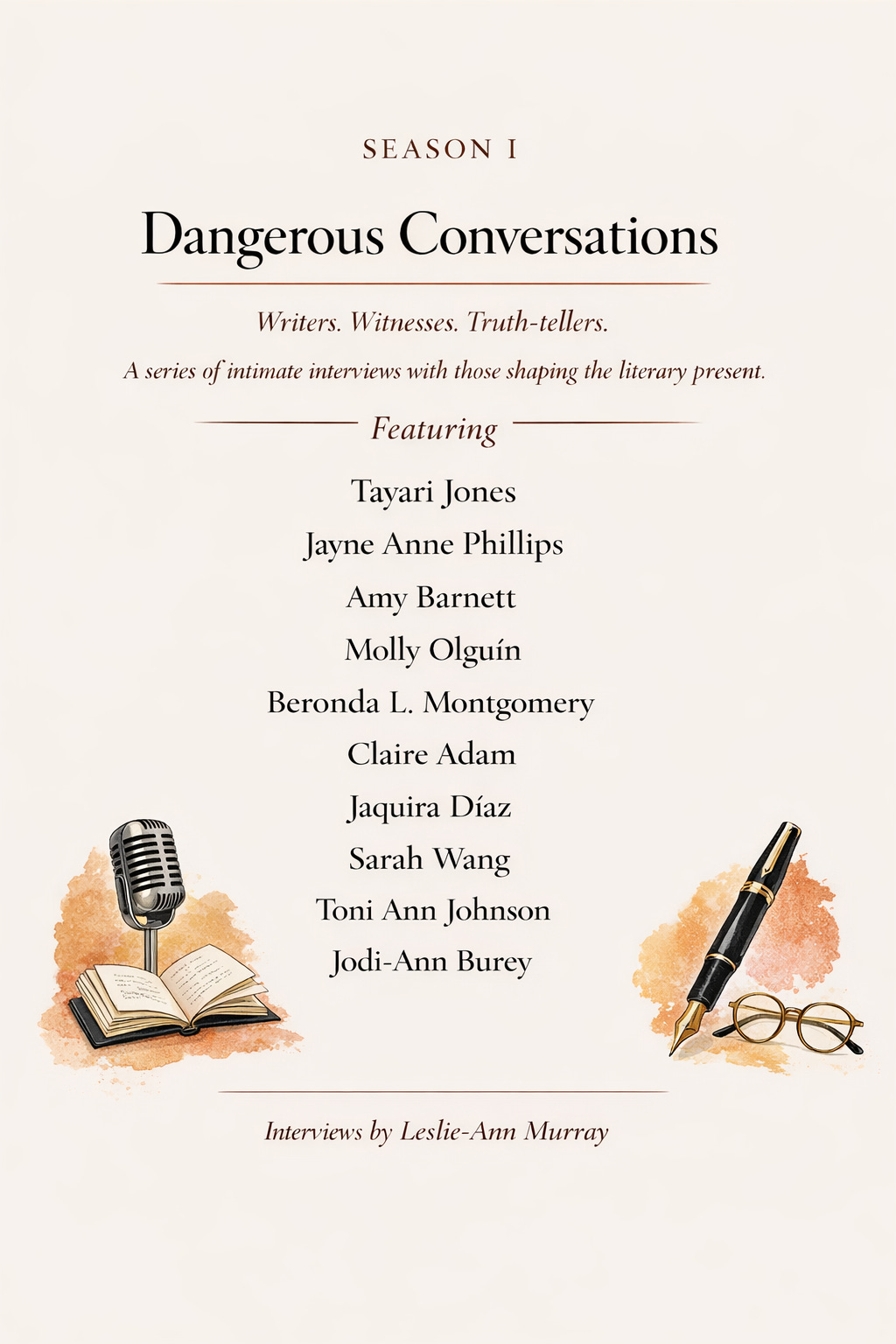
In my recent conversation with Tayari Jones for Adroit Journal, she reminded me that the point is “writing is all [we] got, and I’m required to give it fully to the world.”
Reading, writing, loving, and line dancing in times of hardship and civil rights destruction is not indulgent. Sometimes it’s all we got. I have yet to return to my beloved novel, but I’m currently working on an evocative essay collection that roars, that sits on my chest, and only gives me breath when I’m writing it.
You’ll read my latest interview with Tayari Jones in March, but in the meantime, listen to this excerpt of our conversation.
Lastly, do yourself a favor and get this novel before it’s sold out! It’s so yummy, funny, and breathtaking.
& you have not even seen the big-time poets we are interviewing for National Poetry Month!
Reading In Community!
There is something quietly powerful about reading in a room full of others—voices moving across shared language, strangers becoming witnesses to the same sentences. We read aloud, paused, and allowed the words to settle between us. Some passages opened conversation; others invited silence.
What stayed with me most was the feeling of being held inside the act of reading itself. Communal reading reminds us that literature is not only private, but collective—that meaning deepens when spoken, heard, and carried together. We left the room changed, each of us holding the words a little differently than before.
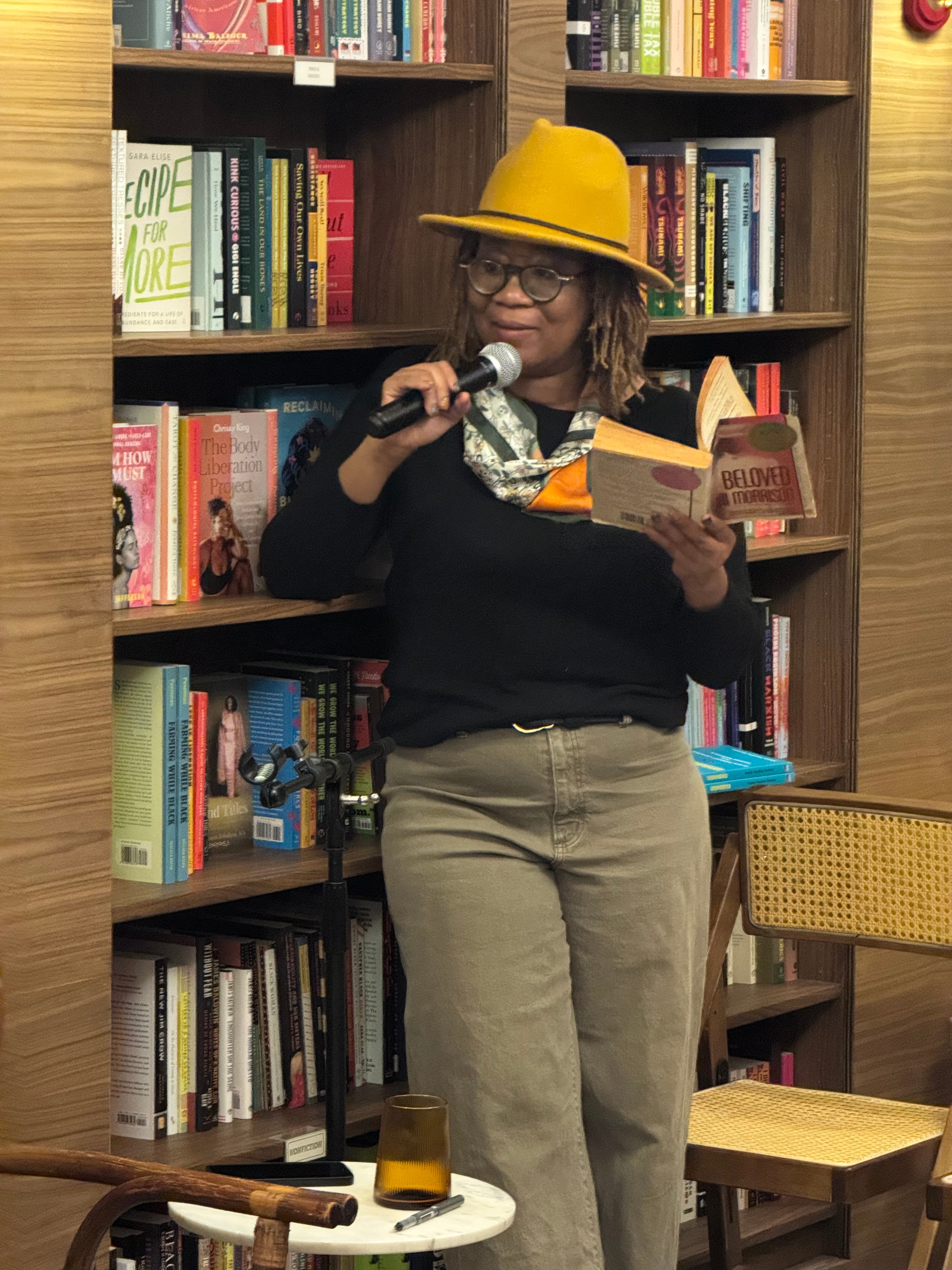
This is one of my favorite scenes in Beloved by Toni Morrison:
“Paul D tied his shoes together, hung them over his shoulder and followed her through the door straight into a pool of red and undulating light that locked him where he stood.
"You got company?" he whispered, frowning.
"Off and on," said Sethe.
"Good God." He backed out the door onto the porch. "What kind of evil you got in here?"
"It's not evil, just sad. Come on. Just step through.”
This scene encapsulates Morrison’s refusal to simplify pain. The haunting is not a monster, but a memory. Not evil, but grief made visible. It reminds me that what lingers—what refuses to leave us—is often not what is wicked, but what has been wounded.
But it also highlights something about energy—how emotion saturates a space, how sorrow can take form, color, temperature. The red light is not a metaphor alone; it is present. Morrison shows us that feeling is not abstract. It lives in rooms. It waits in doorways. It asks to be acknowledged.
COME AND READ WITH ME!

Time: 6:30 PM
Where: Gladys Books & Wine: 306 Malcolm X Blvd, Brooklyn, NY 11233
Price: FREE!